Introduction: Hesco Barrier vs Alternatives — Which Barrier System Is Right for You?
When it comes to perimeter security, flood control, and military force protection, the Hesco barrier vs alternatives decision is critical. Hesco barriers — collapsible wire mesh and fabric containers filled with sand, gravel, or soil — have become a global standard for rapid deployment. But how do these barriers really compare against concrete walls, sandbags, Jersey barriers, gabion walls, T-walls, and bollards?
This comprehensive guide examines each alternative across deployment speed, cost, durability, mobility, and effectiveness. Whether you are securing a military forward operating base, protecting critical infrastructure from floodwaters, or planning a construction site perimeter, the information here will help you make an informed decision.
What Is a Hesco Barrier? A Quick Overview
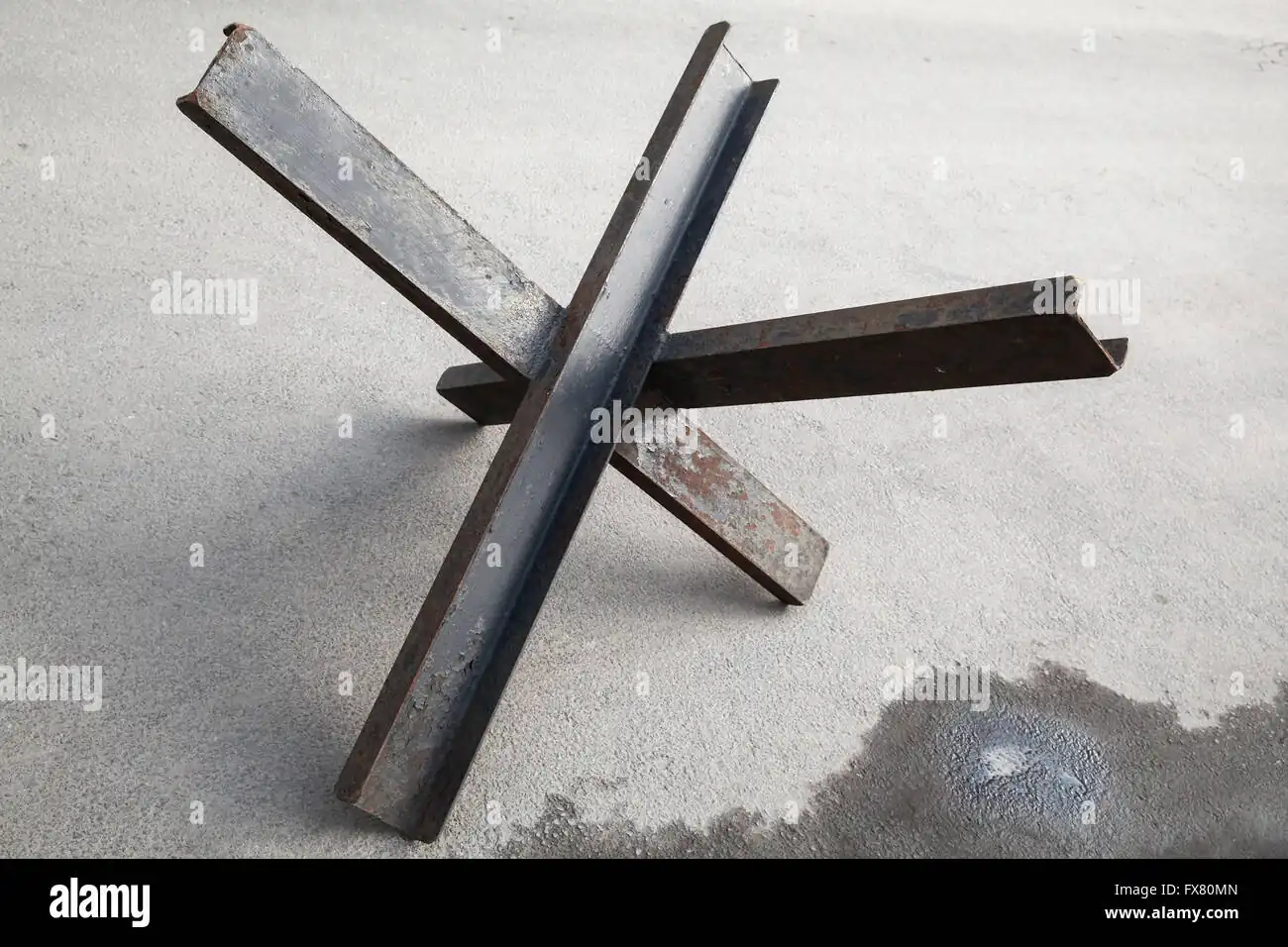
A Hesco barrier (Hesco bastion or Concertainer) is a collapsible barrier system made from heavy-duty galvanized steel wire mesh lined with non-woven polypropylene fabric. When assembled, the units form a cage that is filled on-site with sand, gravel, crushed rock, or soil. The filled barriers provide excellent ballistic protection, blast attenuation, and flood defense.
Key characteristics include:
- Rapid deployment: Empty units fold flat for transport and can be erected and filled in minutes.
- Modular design: Units interconnect to form continuous walls of any length.
- Mobility: Empty units weigh only a fraction of filled weight, simplifying logistics.
- Versatility: Used for military force protection, flood control, erosion control, traffic management, and perimeter security.
Understanding Hesco barriers versus other options begins with recognizing that Hesco is a rapid-deployment system designed for situations where speed and adaptability matter more than permanence.
Hesco Barrier vs Concrete Wall: Key Differences
Comparing Hesco barrier vs concrete wall requires examining four key factors. A Hesco barrier vs concrete wall analysis is essential when deciding between temporary and permanent solutions:
Construction and Installation
A concrete wall requires weeks for design and curing. A Hesco barrier filled with gravel is immediately effective with no curing needed.
Ballistic and Blast Protection
Both offer Level IV ballistic protection. However, concrete spalls under blast loading, whereas Hesco’s granular fill absorbs and disperses energy more effectively.
Cost and Logistics
Concrete walls need heavy transport and skilled labor. Hesco ships flat, fills with local materials, and needs only basic earthmoving equipment. The cost favors Hesco by 30-50% for temporary installations.
Removability
Concrete is permanent. Hesco can be emptied, collapsed, and removed with minimal impact — the clear choice for temporary deployments.
Hesco Barrier vs Sandbags for Flood Control
Sandbags have been the traditional choice for flood control. They are inexpensive and widely available, but a comparison with Hesco barriers reveals critical advantages for modern systems:
- Speed: A team can deploy a Hesco barrier at roughly 10 times the speed of filling and stacking sandbags. A single Hesco unit holds the equivalent of hundreds of sandbags but fills in under a minute with a front-end loader.
- Structural integrity: Sandbags shift and settle, creating gaps. Hesco barriers maintain shape and provide a continuous, water-tight wall.
- Height: Sandbag walls become unstable above 3-4 ft. Hesco barriers can be stacked to 6 ft or higher.
- Labor: A 100-meter sandbag wall requires thousands of person-hours. The same Hesco barrier needs a handful of workers and a loader.
For large-scale flood control, Hesco is faster, stronger, and more reliable. Sandbags remain useful for small-scale emergency sandbagging where heavy equipment cannot reach.
Hesco Barrier vs Jersey Barrier: Which Is Better?
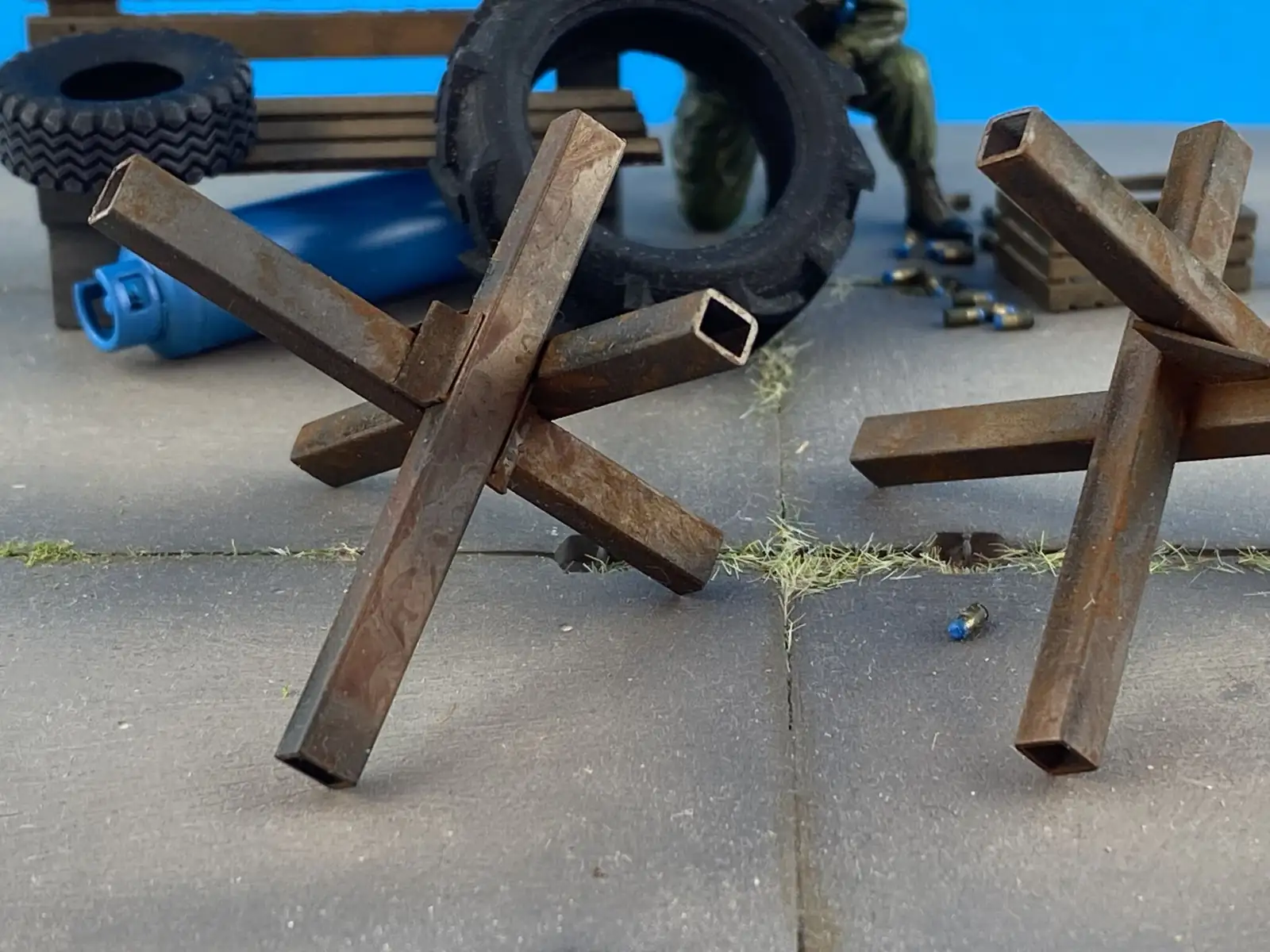
Jersey barriers (K-rail) are precast concrete blocks used for traffic separation and perimeter security. A Hesco barrier vs jersey barrier comparison depends on the application. Understanding the Hesco barrier vs jersey barrier decision points helps you choose correctly:
Traffic and Vehicle Impact: Jersey barriers are shaped to redirect vehicles, making them ideal for highway use. Hesco barriers can stop vehicles but lack the same redirective profile.
Perimeter Security: For blast and ballistic protection, Hesco outperforms. Jersey barriers provide limited ballistic protection and can fail under blast loading.
Deployment: Jersey barriers weigh 3,000-6,000 lbs each and require cranes. Hesco barriers ship flat and deploy rapidly. For traffic control, Jersey barriers win. For force protection and rapid deployment, Hesco is superior.
Hesco Barrier vs Gabion Wall: What Is the Difference?
Gabion walls are wire mesh baskets filled with stone, used for erosion control and retaining walls. A Hesco barrier vs gabion wall comparison reveals fundamental differences despite visual similarity. Examining the Hesco barrier vs gabion wall question comes down to application:
| Feature | Hesco Barrier | Gabion Wall |
|---|---|---|
| Primary use | Military, flood, security | Erosion control, landscaping |
| Fabric liner | Yes (polypropylene) | No (open mesh) |
| Ballistic protection | Yes (Level IV capable) | No |
| Deployment speed | Minutes to hours | Days to weeks |
| Fabric liner for flood | Yes — water-tight | No — water passes through |
The key difference is the fabric liner. Without it, gabion walls allow water and small debris to pass through, making them unsuitable for flood control or blast attenuation. If you need ballistic or flood protection, choose Hesco. If you are stabilizing a slope, choose gabions.
Hesco Barrier vs T-Wall for Military Use
T-walls (T-shaped precast concrete barriers) are widely used by the military for permanent force protection. A Hesco barrier vs t-wall comparison reveals trade-offs in every category. Understanding the Hesco barrier vs t-wall decision factors is key for military planners:
Protection Level
Both provide excellent ballistic and blast protection. T-walls offer predictable performance against direct fire and VBIEDs. Hesco barriers provide comparable protection with added energy absorption through granular displacement.
Deployment and Mobility
T-walls require cranes and concrete foundations. Hesco barriers deploy with a small crew and a front-end loader, and can be dismantled and relocated — a major advantage for expeditionary operations.
Logistics Footprint
A single T-wall weighs 8,000-14,000 lbs. The same perimeter with Hesco fits in a fraction of the transport space because fill is sourced locally.
Longevity
T-walls last decades. Hesco barriers have a 12-24 month service life for the fabric liner. For permanent installations, choose T-walls. For expeditionary use, Hesco is the practical choice.
Hesco Barrier vs Bollards for Vehicle Security
Bollards are vertical posts — typically steel or concrete — designed to control vehicle access. A Hesco barrier vs bollards comparison for vehicle security depends on threat level and site constraints. Understanding the Hesco barrier vs bollards trade-offs helps you choose appropriately.
Vehicle Impact: Certified crash-rated bollards (K4, K8, K12) undergo ASTM F2656 testing. A Hesco barrier can stop vehicles but is not crash-rated in the same standardized fashion. For government buildings and embassies, certified bollards are often a regulatory requirement.
Perimeter Length: Bollards are point barriers for entry points. Hesco provides continuous linear protection. For long perimeters, the cost comparison heavily favors Hesco.
Aesthetics: Bollards can be architecturally finished. Hesco barriers are utilitarian. Many sites use both — bollards at entry points and Hesco along open perimeter sections.
Cost Comparison: Hesco Barrier vs Other Barrier Solutions
Cost is a decisive factor. This comparison accounts for material, transport, installation, and removal across barrier types.
| Barrier Type | Material Cost/ft | Installation | Total Lifecycle Cost/ft |
|---|---|---|---|
| Hesco barrier (3 ft) | $15-25 | Low | $20-35 |
| Concrete wall (3 ft) | $30-60 | High | $50-100 |
| Sandbags (3 ft) | $5-10 | Very High | $15-30 |
| Jersey barrier (3 ft) | $25-45 | Moderate | $40-70 |
| T-wall (6 ft) | $60-120 | High | $100-200 |
| Bollards (each) | $200-800 | Moderate | $300-1,200 |
Sandbags appear comparable in material cost, but factoring labor makes Hesco far more economical over 50 linear feet. Jersey barriers are reusable but heavy to transport, while Hesco ships flat. For temporary deployments of 6-24 months, Hesco offers the lowest total cost among all non-sandbag options.
When to Choose Each Barrier Type: A Decision Guide
Choosing the right barrier requires matching the solution to your specific threat, timeline, and budget. A Hesco barrier vs alternatives evaluation starts with understanding your requirements:
Choose Hesco Barriers When:
- You need rapid deployment (under 24 hours)
- Local fill material is available (sand, gravel, soil)
- Ballistic or blast protection is required
- Flood control is the primary mission
- The barrier will be temporary (6-24 months)
- Lightweight, flat-packed logistics are needed
Choose Concrete Walls When:
- Permanent, maintenance-free protection is needed
- Aesthetics and finish quality matter
- The installation timeline is measured in weeks
Choose Sandbags When:
- Immediate, small-scale flood protection is needed
- Heavy equipment cannot access the site
- Required wall height is under 3 ft
Choose Jersey Barriers When:
- Traffic redirection is the primary goal
- Crash-rated protection is required
- Barriers will be reused across multiple projects
Choose T-Walls When:
- Permanent military-grade protection is required
- The installation is expected to last 5+ years
- Budget allows for heavy transport and crane placement
Choose Bollards When:
- Vehicle access control at specific entry points
- Crash-rated certification is a regulatory requirement
- Visual appearance and urban integration matter
In many real-world deployments, the best solution combines multiple types. A military checkpoint might use crash-rated bollards at the vehicle inspection lane, Hesco barriers for guard towers and perimeter walls, and concrete barriers for long-term defensive positions.
Rapid Deployment: Why Hesco Barriers Outperform Permanent Structures
One area where Hesco barriers clearly outperform every alternative is rapid deployment:
- Military force protection: A platoon can erect a Hesco perimeter wall around a patrol base in 2-3 hours. The same perimeter with sandbags takes days. With T-walls, heavy equipment may not even be available in austere environments.
- Flood emergencies: During the 2011 Mississippi River floods, miles of Hesco barriers protected critical infrastructure in days. Equivalent sandbag walls would have required tens of thousands of person-hours.
- Disaster response: FEMA, the US Army Corps of Engineers, and NATO nations stockpile Hesco barriers specifically for emergency deployment. No other system matches this speed and effectiveness.
The US Army, UK Ministry of Defence, and numerous NATO forces have standardized on Hesco barriers for expeditionary force protection precisely because the combination of speed and effectiveness is unmatched by any alternative.
Conclusion: Choosing the Right Barrier for Your Needs
The barrier landscape offers solutions for every scenario. Hesco barriers excel where rapid deployment, mobility, ballistic protection, and cost-effectiveness are priorities. A Hesco barrier vs gabion wall comparison shows Hesco wins for tactical use while gabions suit erosion control. Meanwhile, comparing Hesco with T-walls favors T-walls for permanence and Hesco for mobility. For vehicle security, use bollards at access points and Hesco for continuous perimeter coverage.
If you are evaluating hesco barrier alternatives, concrete walls and T-walls offer long-term permanence at higher cost, while Jersey barriers suit traffic redirection. For most military, flood control, and security applications requiring temporary protection, Hesco barriers emerge as the optimal choice among all hesco barrier alternatives.
Ready to deploy Hesco barriers? Contact us for a quote or consult our Hesco barrier price guide for detailed cost breakdowns and bulk pricing.