Introduction
When specifying perimeter security barriers, an anti ram barrier crash rated to recognized standards provides verified assurance that the system can stop a vehicle of defined weight traveling at a specified speed. Unlike uncertified barriers, a properly crash rated anti ram barrier delivers documented, verifiable performance data that security professionals, insurance underwriters, and government procurement officers rely on for compliance and risk management.
This comprehensive guide explains everything about crash rated anti ram barriers: what crash ratings mean, the ASTM F2656 standard, the differences between K4, K8, and K12 ratings, testing procedures, certification verification, and how to select the right crash rated barrier for your specific application. Whether you are securing an embassy, military installation, government building, or critical infrastructure, understanding crash ratings is essential for effective perimeter security planning.
What Does Crash Rated Mean for Anti Ram Barriers?
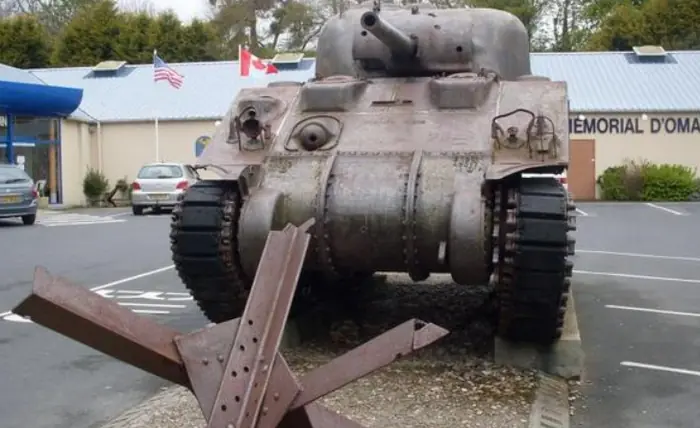
A crash rated anti ram barrier is one that has undergone standardized impact testing and has been assigned a formal crash rating by an accredited testing laboratory. The crash rating certifies that the barrier can stop a specific class of vehicle traveling at a defined speed, with penetration distance within allowable limits.
Why Crash Ratings Matter
Without crash testing, there is no scientific basis to predict how a barrier will perform under impact. Factors such as soil conditions, foundation design, material quality, welding integrity, and geometric configuration all affect real-world performance. Crash testing validates that the complete system — barrier plus foundation — performs as intended. For government, military, and insurance compliance, certified crash ratings are often mandatory.
The Meaning of Crash Rating Designations
Crash ratings follow standardized formats that encode three critical parameters: vehicle weight, impact speed, and allowable penetration. The most common system, ASTM F2656, uses the format "K-rating" where higher numbers indicate greater stopping capability. For example:
- K4: Stops a 4,500 lb (2,040 kg) vehicle at 30 mph (48 km/h). Equivalent to a passenger car or SUV at moderate speed.
- K8: Stops a 15,000 lb (6,800 kg) vehicle at 40 mph (64 km/h). Equivalent to a medium truck or delivery vehicle at highway speed.
- K12: Stops a 15,000 lb (6,800 kg) vehicle at 50 mph (80 km/h). The highest standard rating, equivalent to a heavy truck at highway speed.
Penetration Rating (M-rating)
Beyond the vehicle stopping capability, crash ratings also specify a penetration rating that defines how far the vehicle may travel past the barrier line. M30 allows up to 30 feet (9.1 meters) of penetration, M40 up to 40 feet (12.2 meters), and M50 up to 50 feet (15.2 meters). For most security applications, M30 or better is specified, meaning the vehicle is stopped within 30 feet of the barrier line, preserving the standoff distance to the protected asset.
ASTM F2656 Standard for Anti Ram Barriers
The ASTM F2656 standard is the primary reference for crash testing vehicle barriers in North America and is recognized globally for perimeter security certification. The anti ram barrier ASTM F2656 standard defines test vehicle specifications, impact conditions, barrier performance criteria, and documentation requirements for crash testing. Compliance with the anti ram barrier ASTM F2656 standard is mandatory for most U.S. government security projects.
History and Scope of ASTM F2656
ASTM F2656, formally titled "Standard Test Method for Vehicle Crash Testing of Perimeter Barriers," was developed by ASTM International Committee F12 on Security Systems and Equipment. The standard was created in response to the need for uniform, repeatable crash testing protocols that allow meaningful comparison between different barrier products. It replaced earlier fragmented testing approaches and established consistent criteria used by the U.S. Department of State, Department of Defense, and other government agencies.
Key Elements of the ASTM F2656 Standard
- Test Vehicles: Specifies standard vehicle types including passenger cars (2,040 kg) and medium trucks (6,800 kg), with defined dimensions, weight distribution, and structural characteristics.
- Impact Speeds: Defines nominal impact speeds of 30 mph (48 km/h), 40 mph (64 km/h), and 50 mph (80 km/h) with allowable tolerances.
- Impact Angle: Requires impact at 90 degrees (perpendicular) to the barrier face, the worst-case scenario for barrier loading.
- Penetration Measurement: Specifies how vehicle penetration past the barrier is measured and classified (M30, M40, M50).
- Structural Integrity: Defines acceptable barrier deformation modes and prohibits catastrophic failure (fragmentation that creates secondary hazards).
Other Recognized Standards
While ASTM F2656 is dominant in North America, other international standards include:
- IWA 14-1: International standard developed by ISO, covering vehicle barrier testing with similar test parameters to ASTM F2656.
- PAS 68: British standard for vehicle security barriers, widely used in Europe and the Middle East. Uses a different designation system (e.g., V/7500/50 for a 7,500 kg vehicle at 50 mph).
- DIN EN 1317: European standard primarily for road safety barriers rather than anti-ram security barriers.
When specifying crash rated barriers for international projects, verify which standard is required by the local regulatory authority or project specifications.
Crash Rating Levels: K4 vs K8 vs K12 Explained
Understanding the differences between K4, K8, and K12 crash rated anti ram barriers is essential for selecting the appropriate level of protection. These crash rating levels, defined under the ASTM F2656 standard, specify the vehicle size and impact speed that a barrier must withstand to receive its rating. The higher the K-rating, the greater the stopping capability required from the barrier system. An anti ram barrier crash rated to K4, K8, or K12 provides different levels of vehicle stopping assurance based on your threat environment.
K4 Crash Rating: Moderate Protection
The K4 rating certifies that a barrier can stop a 4,500 lb (2,040 kg) passenger vehicle traveling at 30 mph (48 km/h). This is the lowest crash rating under ASTM F2656 and is typically specified for low to moderate threat environments. K4 rated barriers are suitable for:
- Commercial building entrances and parking access points
- Retail and hospitality perimeter controls
- Campus security where vehicle speeds are naturally limited
- Secondary perimeter layers where a primary barrier already exists
Because the test vehicle is a passenger car at moderate speed, K4 barriers are often lighter and more cost-effective than higher rated systems. Many surface-mounted bollards and removable barriers achieve K4 certification.
K8 Crash Rating: High Protection
K8 rated barriers must stop a 15,000 lb (6,800 kg) medium truck traveling at 40 mph (64 km/h). This represents a significant increase in impact energy compared to K4, requiring heavier barrier construction, deeper foundations, and more robust anchoring systems. A crash rated barrier K4 K8 K12 system must be engineered specifically for its target rating. K8 crash rated barriers are commonly used for:
- Government building access controls
- Military installation perimeter gates
- Airport and transportation security checkpoints
- Critical infrastructure protection
- High-profile commercial facilities
The test vehicle for K8 is a medium-duty truck, simulating a vehicle-borne improvised explosive device (VBIED) delivery platform. K8 barriers must absorb approximately four times the kinetic energy of a K4 impact.
K12 Crash Rating: Maximum Protection
The K12 crash rating is the highest standard rating under ASTM F2656, requiring the barrier to stop a 15,000 lb (6,800 kg) truck traveling at 50 mph (80 km/h). At this speed, the kinetic energy is approximately 1.7 million joules — roughly equivalent to a 15-ton object hitting a wall at highway speed. K12 rated barriers are specified for the most sensitive security applications:
- Embassy and consulate perimeter security
- Government ministry entrances
- Nuclear power plant access control
- Military command facilities
- High-threat critical infrastructure
K4 vs K8 vs K12: Direct Comparison
| Parameter | K4 | K8 | K12 |
|---|---|---|---|
| Test Vehicle Weight | 4,500 lb (2,040 kg) | 15,000 lb (6,800 kg) | 15,000 lb (6,800 kg) |
| Impact Speed | 30 mph (48 km/h) | 40 mph (64 km/h) | 50 mph (80 km/h) |
| Kinetic Energy | ~135,000 J | ~680,000 J | ~1,700,000 J |
| Typical Foundation Depth | 12-24 inches | 24-48 inches | 36-60+ inches |
| Relative Cost Factor | 1x (baseline) | 2-3x | 3-5x |
| Common Applications | Commercial, retail | Government, military | Embassy, nuclear |
When comparing K4 vs K8 vs K12 crash rated barriers, remember that the required rating should match the threat assessment. Choosing the right crash rated barrier K4 K8 K12 level depends on your specific threat environment, site conditions, and asset criticality. Specifying K12 when K4 is sufficient wastes budget. Specifying K4 when K12 is needed creates unacceptable security risk. Always base the selection on a formal threat and risk assessment conducted by a qualified security professional.
Crash Rated Barrier Testing Procedures

Crash rated barrier testing procedures follow strict protocols defined by standards such as ASTM F2656, IWA 14-1, and PAS 68. Understanding these procedures is important for verifying that a crash rated barrier has been properly tested and for evaluating whether test results are applicable to your specific installation conditions.
Test Vehicle Preparation
The testing procedure begins with preparing the standardized test vehicle. For ASTM F2656, the vehicle must meet specific dimensional and weight criteria:
- Passenger car (for K4): 4,500 lb ± 100 lb, with factory-specifications suspension and tires fully inflated to recommended pressure
- Medium truck (for K8 and K12): 15,000 lb ± 500 lb, loaded with ballast to achieve the specified gross vehicle weight, with the center of gravity within defined limits
The vehicle is inspected, weighed, and documented before each test. Fuel tanks are filled with water or non-flammable fluid for safety. All test vehicle specifications are recorded in the final test report.
Instrumentation and Data Collection
Modern crash testing of anti ram barriers requires extensive instrumentation to capture performance data:
- High-speed cameras: Multiple camera angles at 500-1000 frames per second to document impact dynamics, barrier deformation, and vehicle trajectory
- Speed traps: Radar or laser speed measurement systems positioned before the impact point to verify impact velocity within ±1 mph tolerance
- Accelerometers: Mounted on the vehicle and barrier to measure deceleration forces during impact
- Penetration measurement: Reference markers and survey equipment to precisely measure the furthest extent of vehicle intrusion past the barrier line
The Impact Test Protocol
The crash rated barrier testing procedures follow a standardized sequence:
- Barrier installation: The barrier is installed according to manufacturer specifications, including foundation work, anchoring, and any hydraulic or electrical connections. The installation is documented by video and still photography.
- Pre-test inspection: Independent inspectors verify that the barrier is properly installed, all systems function correctly, and the test setup meets standard requirements.
- Vehicle launch: The test vehicle is accelerated along a guidance track or tow system to achieve the target speed at the point of impact, with the vehicle centered on the barrier and approaching at a 90-degree angle.
- Impact phase: The vehicle strikes the barrier at the specified speed. High-speed cameras and sensors record the entire event from initial contact through vehicle stopping or barrier failure.
- Post-impact inspection: Engineers measure penetration distance, assess barrier structural integrity, document damage patterns, and evaluate any fragmentation or secondary hazards.
Penetration Distance Classification
After the crash test, the penetration distance is measured and assigned an M-rating:
- M30: Vehicle penetration does not exceed 30 feet (9.1 meters) past the barrier line. This is the most commonly specified penetration class for high-security applications.
- M40: Penetration up to 40 feet (12.2 meters). Acceptable for moderate security applications.
- M50: Penetration up to 50 feet (15.2 meters). The least restrictive penetration class.
A barrier must achieve both a K-rating (stopping capability) and an M-rating (penetration control) to be fully certified under ASTM F2656.
How to Verify Crash Test Certification
Verifying that a barrier product has legitimate crash test certification is a critical step in the procurement process. Not all products marketed as "crash rated" have been properly tested, and relying on unverified certification claims can create serious liability and security gaps. Here is how to verify anti ram barrier crash test certification properly.
Request the Original Test Report
The most reliable way to verify certification is to request the complete original test report from the manufacturer. A legitimate test report should include:
- Testing laboratory identification: Name, address, and accreditation credentials of the independent testing facility that conducted the crash test
- Test standard reference: Clear citation of the test standard used (ASTM F2656, IWA 14-1, PAS 68, etc.) including the edition or year of the standard
- Barrier description: Detailed description of the tested barrier including model number, dimensions, materials, foundation specifications, and anchoring system
- Test vehicle data: Vehicle make, model, weight, dimensions, and modifications (if any) used in the test
- Impact results: Documented impact speed, penetration distance, assigned K-rating and M-rating, and any observations about barrier behavior
- Video evidence: Reference to high-speed video recordings of the test, which should be available for review
If a manufacturer cannot or will not provide the original test report, this is a significant red flag. Legitimate manufacturers maintain comprehensive test documentation and are transparent about their certification status.
Verify the Testing Laboratory Credentials
The testing laboratory that conducted the crash test should be an accredited, independent third-party facility. In North America, reputable crash testing laboratories include:
- KARCO Engineering (California): One of the most recognized crash test facilities for anti ram barriers in the United States
- CSI Testing (Texas): Accredited testing facility specializing in vehicle security barrier testing
- Southwest Research Institute (Texas): Independent research and testing organization with crash testing capabilities
- MGA Research Corporation: Accredited testing laboratory with multiple facilities across the United States
Contact the testing laboratory directly to confirm that they conducted the test and that the results match the report provided by the manufacturer. Reputable laboratories will verify test records for legitimate procurement inquiries.
Check the Certification Scope
When reviewing crash test certification documentation, pay attention to the scope of the certification:
- Complete system certification vs. component certification: Does the certification cover the barrier, foundation, and anchoring as a complete system? Some certifications only cover the barrier panel or bollard itself, not the installed system.
- Directional limitations: Is the barrier certified for impact from both directions or only one?
- Operational status: Was the barrier tested in the deployed (locked) position? Some retractable or movable barriers have different performance in different operational states.
- Aging and wear: Does the certification account for repeated deployments and environmental aging? Most crash certifications are based on a single test of a new barrier.
Request Video Evidence
Credible crash test certifications are always accompanied by high-speed video documentation. Request to view the full, unedited crash test video. Look for:
- Multiple camera angles including overhead, side, and close-up views
- Visible speed verification (radar or laser speed readout)
- Pre-test and post-test inspection footage
- No evidence of editing or splicing that could conceal critical moments
Video evidence provides powerful confirmation that the crash test actually occurred as documented and allows you to observe the barrier's performance firsthand.
Anti Ram Barrier Crash Rated Certification Requirements
Obtaining crash rated barrier certification is a rigorous process that involves multiple stages of engineering, testing, and documentation. An anti ram barrier crash rated under ASTM F2656 must undergo thorough evaluation to confirm its stopping capability. Understanding the certification requirements helps security professionals evaluate whether a barrier product meets project specifications and regulatory mandates.
Engineering and Design Requirements
Before crash testing can occur, the barrier system must be engineered to meet the target crash rating. Key engineering requirements include:
- Structural analysis: Finite element analysis (FEA) modeling to predict barrier behavior under impact loads and optimize material thickness, reinforcement, and connection details
- Foundation design: Engineered foundation specifications including concrete mix design, reinforcement steel layout, soil bearing capacity requirements, and anchor bolt patterns
- Material specifications: Defined steel grades (typically ASTM A36 or A572), wall thicknesses, weld procedures, and corrosion protection coatings
- Hydraulic and electrical systems: For moveable barriers, the operating mechanism must be designed to lock securely in the deployed position and remain locked during impact
Test Specimen Requirements
The anti ram barrier crash rated certification requirements specify that the test specimen must be representative of production units. Key requirements include:
- Full-scale testing: Crash tests must be conducted on full-scale barrier systems, not scale models or simulations
- Production-representative construction: The test barrier must be manufactured using the same materials, processes, and quality controls as production units
- Standard installation: The barrier must be installed according to the manufacturer's standard installation instructions using typical foundation and anchoring methods
- Single test per configuration: Each unique barrier model and foundation combination requires its own crash test. A test on one barrier model does not certify a different model with different dimensions or materials.
Documentation and Reporting Requirements
Comprehensive documentation is required for ASTM F2656 certification:
- Detailed test plan: Pre-test documentation describing the barrier, test vehicle, instrumentation, and success criteria
- Installation records: Photographs and notes documenting the barrier installation process, including foundation excavation, reinforcement placement, concrete pouring, and curing
- Vehicle certification: Documentation of test vehicle weight, dimensions, and condition before impact
- Test data package: Complete test results including video recordings, penetration measurements, speed verification data, and structural damage assessment
- Certification letter: Formal statement from the testing laboratory certifying the assigned crash rating and penetration classification
Recertification and Re-testing Requirements
Certification is not permanent. Barriers may require recertification under certain conditions:
- Design changes: Any modification to the barrier design, materials, dimensions, or foundation specifications may invalidate existing certification and require re-testing
- Standard updates: When ASTM F2656 or other governing standards are updated, previously certified barriers may need re-testing to maintain compliance with the revised standard
- Manufacturing changes: Changes in manufacturing facilities, production processes, or quality control procedures may require verification testing
- Periodic re-certification: Some procurement contracts require evidence that the barrier model continues to meet certification standards, particularly if the original test was conducted many years ago
Understanding these crash rated barrier certification requirements ensures that procurement decisions are based on valid, current, and applicable test data. Meeting crash rated barrier certification requirements is a prerequisite for most government and institutional security projects. Always verify that the certification covers the exact barrier configuration, foundation design, and installation method proposed for your project.
Crash Rated Barriers for Embassy Security
Embassies and consulates are among the most sensitive applications for perimeter security barriers. A crash rated barrier for embassy security must meet stringent requirements established by the U.S. Department of State, host country security protocols, and international diplomatic security standards. Crash rated barriers for embassy security protect diplomatic personnel, sensitive information, and national security assets from vehicle-borne threats.
Diplomatic Security Standards
The U.S. Department of State Bureau of Diplomatic Security (DS) sets the benchmark for embassy perimeter security worldwide. Key requirements include:
- K12 crash rating minimum: Most embassy perimeter barriers must achieve a K12 crash rating under ASTM F2656, stopping a 15,000 lb vehicle at 50 mph. This is the highest standard crash rating and reflects the elevated threat level facing diplomatic facilities.
- M30 penetration rating or better: Vehicle penetration must be limited to 30 feet or less to maintain adequate standoff distance from the embassy building. In constrained urban sites where standoff distances are limited, M30 or even more restrictive penetration limits may be specified.
- Continuous perimeter coverage: Barriers must provide uninterrupted protection around the entire perimeter, with no gaps that could allow vehicle access. This requires careful integration of fixed barriers, gates, and vehicle access control systems.
Types of Embassy Security Barriers
Embassy security perimeters typically use a layered approach with multiple barrier types. The selection of a crash rated barrier for embassy security depends on site conditions, threat assessment, and operational requirements:
- Perimeter walls and anti-ram fences: Fixed barriers that form the primary perimeter line, often combining aesthetic architectural treatment with crash-rated structural capability
- Vehicle access gates: Sliding or swing gates that maintain the K12 crash rating when closed, with rapid deployment capability for emergency situations
- Bollard systems: Surface-mounted or recessed bollards at vehicle entry points, pedestrian access ways, and service entrances
- Active wedge barriers: Rapidly deployable barriers for high-security vehicle inspection lanes and emergency access points
- Anti-ram planters: Aesthetic barrier solutions that combine landscaping with crash-rated structural cores for urban embassy locations
Special Considerations for Embassy Installations
Installing crash rated barriers for embassy security involves unique challenges:
- International logistics: Barriers may need to be shipped overseas and installed in locations with limited local construction capabilities. Modular barrier systems that can be assembled on-site with basic tools are preferred for these applications.
- Host country coordination: Embassy security barriers must comply with both U.S. Department of State standards and host country regulations regarding building codes, historic preservation, and urban planning.
- Aesthetic requirements: Many embassy locations require barriers that blend with the surrounding architectural environment. Anti-ram planters, decorative bollards, and architecturally finished barrier walls help maintain a welcoming diplomatic presence while providing necessary security.
- Blast mitigation integration: Embassy barriers often need to provide both anti-ram and blast mitigation capabilities, requiring combined testing and certification that addresses both threats simultaneously.
Case Study: Embassy Perimeter Security Evolution
Following the 1998 U.S. embassy bombings in Nairobi and Dar es Salaam, the U.S. Department of State significantly upgraded perimeter security standards worldwide. The Inman Report and subsequent security assessments established new requirements for setback distances, barrier crash ratings, and perimeter hardening. Today, new embassy compounds are designed with security integrated from the earliest planning stages, ensuring that crash rated barriers are part of a comprehensive security architecture rather than retrofitted after construction.
Which Crash Rated Anti Ram Barrier Is Right for Your Site?
Selecting the right crash rated anti ram barrier for your site requires careful evaluation of threat levels, site conditions, operational requirements, and budget constraints. An anti ram barrier crash rated appropriately for your threat environment balances security needs with cost-effectiveness. No single barrier type or crash rating is optimal for every application. Here is a systematic approach to making the right choice.
Step 1: Conduct a Threat and Risk Assessment
Before selecting any barrier, conduct a formal threat and risk assessment that considers:
- Vehicle-borne threat level: What is the likelihood of a vehicle-borne improvised explosive device (VBIED) attack or vehicle ramming attack at your facility? This determines the minimum crash rating required.
- Asset value and criticality: What is the value of the assets being protected? Government facilities, military installations, and critical infrastructure typically require higher crash ratings than commercial buildings.
- Regulatory requirements: Are there specific crash rating requirements mandated by government agencies, insurance policies, or industry standards? For example, U.S. Department of State facilities require K12 certification.
Step 2: Evaluate Site Conditions
Site conditions significantly influence which barrier type is feasible and cost-effective:
- Available standoff distance: If there is limited distance between the barrier line and the protected asset, a lower M-rating (e.g., M30) is essential to prevent vehicle penetration reaching the building.
- Soil and geotechnical conditions: Poor soil conditions may require deep foundations or soil improvement for higher-rated barriers. K4 barriers may be feasible with surface mounting, while K12 barriers typically require substantial below-grade foundations.
- Utility infrastructure: Underground utilities, drainage systems, and existing foundations can limit barrier placement or increase installation costs.
- Traffic flow requirements: High-traffic entry points require barriers with fast cycle times and high reliability. Low-traffic service entrances may be suitable for manually deployed barriers.
Step 3: Match Barrier Type to Application
Different barrier types are suited to different applications when considering which crash rated anti ram barrier is right for your site:
| Application | Recommended Barrier Type | Typical Crash Rating |
|---|---|---|
| Main vehicle entrance (high traffic) | Active wedge barrier or sliding gate | K12 |
| Secondary vehicle entrance (low traffic) | Retractable bollards or rising arm barrier | K4 to K8 |
| Pedestrian access with occasional vehicle access | Fixed or removable bollards | K4 to K12 |
| Perimeter boundary protection | Anti-ram wall or fence system | K8 to K12 |
| Commercial parking lot entrance | Surface-mounted bollards or rising arm | K4 |
| Government building entrance | Active wedge barrier or crash-rated gate | K8 to K12 |
Step 4: Consider Operational Factors
Beyond crash rating, operational factors that affect barrier selection include:
- Cycle time: How quickly must the barrier open and close? High-traffic entrances need fast cycle times (3-5 seconds) to avoid traffic backups.
- Reliability and redundancy: Critical security barriers should have redundant power systems, manual override capability, and fail-safe operation.
- Maintenance requirements: Hydraulic barriers require regular maintenance including fluid changes, seal replacement, and system testing. Mechanical barriers may have lower maintenance needs.
- Environmental conditions: Barriers in cold climates require freeze protection for hydraulic systems. Coastal installations need corrosion-resistant materials.
Step 5: Evaluate Total Cost of Ownership
The cost of a crash rated barrier extends beyond the initial purchase price:
- Foundation and installation: Higher crash ratings require more extensive foundations, which can represent 40-60% of total installed cost
- Ongoing maintenance: Budget for annual maintenance, spare parts, and periodic system testing
- Lifecycle replacement: Most barrier systems have a service life of 15-25 years; factor eventual replacement into long-term planning
- Training: Security personnel must be trained in proper barrier operation, emergency procedures, and maintenance protocols
By following this systematic approach, you can select the optimal crash rated anti ram barrier that provides the right level of protection for your specific site conditions, threat environment, and budget.
Conclusion
Selecting the right crash rated anti ram barrier is a critical decision that directly impacts the safety and security of people, property, and assets. Whether you need an anti ram barrier crash rated to K4, K8, or K12, understanding the testing standards and certification process is essential. Throughout this guide, we have covered the knowledge needed to specify and procure crash rated barriers with confidence.
We began by explaining what crash ratings mean and why independent testing is essential for verifying barrier performance. The ASTM F2656 standard provides the foundation for crash testing in North America, with K4, K8, and K12 ratings representing increasing levels of vehicle stopping capability. We examined the differences between these ratings, the testing procedures used to validate them, and how to verify that certification claims are legitimate and applicable to your specific installation.
For embassy security and other high-threat applications, K12 rated barriers with M30 penetration limits are the standard. These installations require careful integration of multiple barrier types, consideration of international logistics and local regulations, and a comprehensive approach to perimeter security that includes both crash-rated barriers and blast mitigation measures.
When selecting a barrier for your site, follow a systematic approach: conduct a threat and risk assessment, evaluate site conditions, match barrier type to application, consider operational factors, and evaluate total cost of ownership. This ensures that the barrier you choose provides appropriate protection without unnecessary expenditure.
Remember these key takeaways:
- Always verify crash test certification by requesting original test reports, confirming testing laboratory credentials, and reviewing video evidence. Never rely on manufacturer claims alone.
- Match the crash rating to the threat. K12 is not always necessary, and K4 may not be sufficient. Base your decision on a formal risk assessment.
- Consider the complete system. The barrier, foundation, anchoring, and operating mechanism must all work together. Certification covers the complete installed system, not just individual components.
- Plan for the long term. Maintenance, training, and lifecycle replacement are ongoing responsibilities. Choose a barrier system that your team can support throughout its service life.
By applying the knowledge in this guide, security professionals, architects, engineers, and procurement officers can make informed decisions about crash rated anti ram barriers that protect facilities against vehicle-borne threats while meeting regulatory requirements and budget constraints. For specific project requirements, consult with qualified security engineers and certified barrier manufacturers who can provide detailed guidance based on your unique situation.