Introduction
An anti ram barrier is a specialized security device designed to stop vehicle-ramming attacks by preventing unauthorized vehicles from penetrating protected perimeters. These robust physical security barriers are essential for protecting critical infrastructure, government buildings, military installations, and commercial facilities against vehicle-borne threats. Whether you are evaluating an anti ram barrier for a new construction project or retrofitting an existing perimeter, understanding the types, installation requirements, costs, and manufacturer options is crucial for making an informed procurement decision.
This comprehensive guide covers everything you need to know about anti ram barriers — from basic definitions and working principles to detailed installation procedures, price comparisons, and manufacturer selection criteria. We also examine how anti ram barriers compare to bollards and why they are increasingly specified for government building security worldwide.
What Is an Anti Ram Barrier?
Definition and Purpose
An anti ram barrier is a physical security structure designed to absorb and redirect the kinetic energy of a moving vehicle, bringing it to a controlled stop before it can reach a protected asset. Unlike simple traffic barriers that merely mark boundaries, certified anti ram barriers undergo rigorous crash testing to demonstrate their ability to stop vehicles of specific weights traveling at defined speeds.
How Anti Ram Barriers Work
Anti ram barriers operate on principles of energy absorption and momentum redirection. When a vehicle strikes the barrier, the barrier transfers the impact force to its foundation system — typically a reinforced concrete footing or deeply embedded steel piles. The barrier itself may deform plastically (absorbing energy through controlled bending), transfer load through structural steel members, or use the vehicle's own weight against it through geometric design.
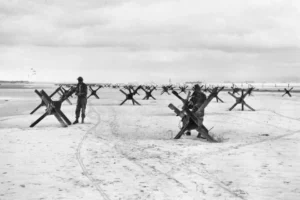
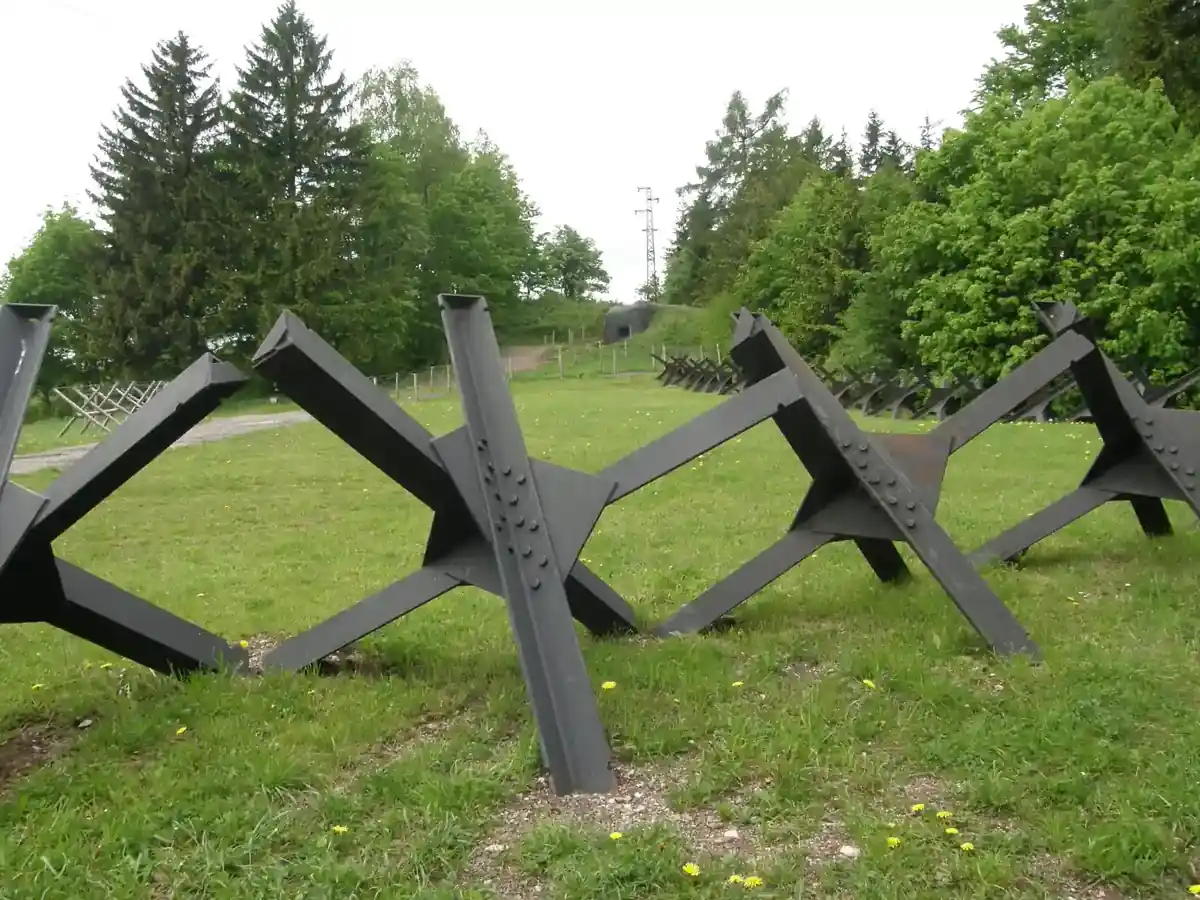
The classic Czech Hedgehog design, originally developed as an anti-tank obstacle, exemplifies this principle. Its three intersecting steel arms create a structure that lifts a vehicle's wheels off the ground, dissipating forward momentum and preventing passage. Modern crash-rated barriers use similar physics but incorporate engineered foundation systems and certified materials to meet specific performance standards such as ASTM F2656 or IWA 14-1.
Key Specifications and Performance Metrics
- Crash Rating: K4 (4.5-ton vehicle at 30 mph), K8 (6.8-ton at 40 mph), K12 (6.8-ton at 50 mph) per ASTM F2656
- Penetration Rating: M30 through M50 categories define allowable vehicle penetration distance
- Load Capacity: Structural barriers typically withstand 30-60 tonnes of impact force
- Deployment Configuration: Single units, linear arrays, or staggered rows for layered defense
- Material: Typically L140/140/13mm hot-rolled angle steel or equivalent structural sections
Types of Anti Ram Barriers and How They Work
Anti ram barriers come in several distinct types, each suited to different threat levels, site conditions, and budget constraints. Understanding these categories helps procurement teams select the right solution for their specific perimeter security requirements.
Steel Anti Ram Barriers (Czech Hedgehog)
Steel anti ram barriers, particularly the Czech Hedgehog design, are among the most cost-effective and proven solutions available. Constructed from three L140/140/13mm hot-rolled angle steel arms welded at 90-degree angles, these barriers weigh 198-240 kg each and can be deployed individually or in continuous lines. Their geometric design lifts vehicle wheels off the ground, effectively stopping light to medium vehicles. Key advantages include low unit cost ($95-150 material cost), no foundation requirements, easy installation, and inherent durability. These barriers are ideal for temporary or semi-permanent deployment at military checkpoints, border security positions, and construction site perimeters.
Concrete Barriers (Jersey Barriers)
Precast concrete barriers, commonly known as Jersey barriers, are widely used for traffic separation and perimeter protection. While effective against passenger vehicles, they are less reliable against heavy trucks and may fragment under high-impact collisions. They require heavy equipment for placement and are difficult to remove once installed.
Retractable Bollards
Hydraulic or pneumatic retractable bollards offer the advantage of selective access control. They can be raised to block vehicle entry and lowered to permit authorized access. However, crash-rated bollard systems are significantly more expensive ($3,000-10,000 per unit) and require substantial subsurface excavation and hydraulic infrastructure.
Portable Vehicle Barriers
For temporary security needs, portable anti ram barriers provide flexible deployment options. These include water-filled barriers, steel beam gates, and modular steel panels that can be quickly assembled and relocated as threat levels change.

Anti Ram Barrier vs Bollards: Key Differences
A common question in perimeter security planning is the anti ram barrier vs bollard comparison. While both serve to prevent vehicle intrusion, they differ significantly in application, cost, and performance characteristics.
| Feature | Anti Ram Barrier | Bollards |
|---|---|---|
| Cost per unit | $100-500 | $3,000-10,000 |
| Installation | No foundation required | Requires deep concrete footing |
| Relocatability | Easily moved with forklift | Fixed / difficult to relocate |
| Crash rating | K4-K12 depending on configuration | K4-K12 with certified foundation |
| Selective access | Manual removal required | Hydraulic retraction available |
| Best for | Large perimeters, temporary deployment | Entry points, urban settings |
For perimeter security applications where cost-effectiveness and rapid deployment are priorities, steel anti ram barriers offer a compelling advantage over bollard systems. However, for controlled entry points requiring frequent vehicle access, retractable bollards may be the more practical choice. Many security consultants recommend a layered approach using both barrier types in complementary roles.
Anti Ram Barrier Installation Guide
Proper anti ram barrier installation is critical to ensure the barrier performs as intended under impact conditions. While steel anti ram barriers like the Czech Hedgehog require minimal site preparation compared to foundation-dependent systems, following correct installation procedures ensures maximum effectiveness.
Site Preparation
Before installing any anti ram barrier, conduct a thorough site assessment that includes: evaluating ground conditions (soil type, drainage, load-bearing capacity), identifying underground utilities, measuring the protected perimeter length, determining required crash ratings based on threat assessment, and planning barrier spacing and configuration. For steel barriers placed on unpaved surfaces, ensure the ground is leveled and compacted to prevent uneven settling.
Installation Process for Steel Anti Ram Barriers
- Layout and Marking: Mark barrier positions along the perimeter at intervals appropriate for the threat level. For continuous protection, place barriers with minimal gaps (typically 0.5-1 meter between units for staggered deployment).
- Ground Preparation: Level the installation surface. For soft ground, consider placing a compacted gravel base or concrete pads under each barrier foot to prevent sinking.
- Barrier Placement: Use a forklift, crane, or boom truck to position each barrier unit. Steel barriers weighing 198-240 kg require mechanical handling equipment.
- Alignment: Align barriers in a straight line or staggered formation. Staggered rows provide enhanced protection by creating a continuous obstacle even if vehicles push through the first row.
- Securing (Optional): For permanent installations, barriers may be anchored to concrete footings using embedded bolts or welded base plates.
- Quality Check: Verify alignment, spacing, and stability. Test that each barrier is firmly seated and cannot be displaced manually.
Installation Considerations for Different Barrier Types
Concrete barriers require crane placement and may need interlocking connections. Bollard systems require excavation, concrete formwork, hydraulic line installation, and electrical connections — typically 2-5 days per installation. Steel anti ram barriers can be deployed at rates of 20-30 units per hour with a single forklift and 2-3 workers, making them the fastest option for large perimeters.
Top Anti Ram Barrier Manufacturers
Selecting a reliable anti ram barrier manufacturer is just as important as choosing the right barrier type. The global market includes both specialized security barrier manufacturers and general steel fabrication companies that produce barriers to certified specifications.
Key Evaluation Criteria for Manufacturers
- Crash Test Certification: Verify that the manufacturer provides independent crash test documentation from accredited testing laboratories (ASTM F2656, IWA 14-1, PAS 68, or equivalent).
- Production Capacity: Assess whether the manufacturer can meet your volume requirements and delivery timeline. Medium-scale fabricators can produce 60-80 units per day with 20 welders.
- Quality Control: Look for manufacturers with certified welding programs (AWS D1.1 or ISO 3834), material traceability, and dimensional inspection protocols.
- Export Experience: For international procurement, verify the manufacturer's experience with export documentation, container loading, and international shipping logistics.
- Customization Capability: The ability to produce variants with different arm lengths, material grades, surface treatments, or foundation connection details.
Leading Manufacturing Regions
China: Chinese steel fabricators in Hebei, Shandong, and Jiangsu provinces offer competitive pricing ($95-150 material cost per standard unit) and large production capacity. Many have experience exporting defense and security products globally.
Europe: European manufacturers typically produce to higher certification standards (PAS 68, IWA 14-1) and offer specialized crash-rated designs with documented test results. Pricing is higher but includes comprehensive certification packages.
Middle East: Regional fabricators in UAE and Saudi Arabia serve local government and military procurement with rapid delivery and localized certification support.
Questions to Ask Potential Manufacturers
- Do you have independent crash test certification for your barrier design?
- What material grades do you use (e.g., S235JR, S355JR, Q235B)?
- Can you provide samples or reference installations?
- What is your typical lead time for orders of 100, 500, and 1,000+ units?
- Do you offer on-site installation supervision or training?
- What warranty do you provide on materials and workmanship?
Anti Ram Barrier Price Guide and Cost Factors
Understanding the anti ram barrier price list and cost factors is essential for budgeting perimeter security projects. Anti ram barrier costs vary widely based on type, certification, quantity, and delivery location.
Price Ranges by Barrier Type
| Barrier Type | Unit Price Range | Installation Cost | Total Cost (100 units) |
|---|---|---|---|
| Steel Czech Hedgehog | $150-400 | $20-50/unit | $17,000-45,000 |
| Concrete Jersey Barrier | $100-300 | $50-100/unit | $15,000-40,000 |
| Crash-rated Bollard | $3,000-10,000 | $1,000-3,000/unit | $400,000-1,300,000 |
| Portable Steel Barrier | $500-2,000 | $50-100/unit | $55,000-210,000 |
Factors Affecting Anti Ram Barrier Cost
- Material Costs: Steel prices fluctuate based on global commodity markets. In 2026, hot-rolled angle steel is approximately $700-900/ton depending on grade and region.
- Crash Certification: Barriers with documented crash test certification command premium pricing (20-50% premium over uncertified equivalents).
- Quantity Discounts: Bulk orders of 500+ units typically receive 15-30% volume discounts. Government procurement contracts may negotiate additional reductions.
- Surface Treatment: Galvanized or specially coated barriers cost 10-20% more than painted or unfinished steel.
- Logistics: International shipping, customs clearance, and inland transport can add 20-40% to landed cost depending on destination.
Cost Comparison: Anti Ram Barrier vs Alternatives
When comparing total cost of ownership, steel anti ram barriers offer significant advantages. A 500-meter perimeter protected by steel Czech Hedgehog barriers costs approximately $85,000-225,000, versus $500,000-1,500,000 for crash-rated bollards and $200,000-400,000 for concrete barriers. Steel barriers also retain residual value — they can be relocated, repurposed, or sold as scrap steel when no longer needed.
Anti Ram Barriers for Government Buildings
Anti ram barriers for government buildings represent a critical component of national security infrastructure. Government facilities — including embassies, military headquarters, legislative buildings, courthouses, and intelligence agencies — face elevated vehicle-borne threat risks that demand proven, certified protective solutions.
Security Requirements for Government Facilities
Government building perimeter security typically follows established standards such as the Interagency Security Committee (ISC) guidelines in the United States, or equivalent national frameworks. These standards specify minimum standoff distances, crash ratings, and barrier deployment configurations based on facility threat levels. Key considerations include:
- Standoff Distance: The distance between the barrier line and the protected building must accommodate the vehicle stopping distance plus a safety margin to prevent debris impact.
- Crash Rating: Most government facilities require at least K4 or K8 rated barriers, with high-threat facilities (embassies, military command centers) specifying K12 certification.
- Aesthetic Integration: Urban government buildings often require barriers that blend with architectural design — painted barriers, integrated planter systems, or decorative cladding.
- Access Control Integration: Barriers must work with vehicle inspection points, guard booths, and electronic access control systems.
Recommended Barrier Configurations
For government building perimeters, a layered defense approach is recommended:
- Outer Perimeter: Steel anti ram barriers spaced 1-2 meters apart in staggered rows as the first line of defense.
- Vehicle Entry Points: Crash-rated hydraulic bollards or sliding gates with integrated vehicle inspection areas.
- Inner Perimeter: Reinforced barriers or planters at the building facade line for final protection.
- Anti-trap Barriers: Strategically placed barriers to prevent vehicle circumnavigation of entry control points.
Procurement Considerations for Government Contracts
Government procurement of anti ram barriers typically involves competitive bidding processes with specific requirements for crash test certification, material certifications, and compliance with national security standards. Manufacturers seeking government contracts should prepare comprehensive technical submittals including independent test reports, quality management system certifications (ISO 9001), and references from previous government installations.
Conclusion
Choosing the right anti ram barrier requires careful evaluation of your specific threat environment, site conditions, budget, and operational requirements. This guide has covered the essential information you need to make an informed procurement decision.
Key Takeaways
- Steel anti ram barriers (Czech Hedgehog type) offer the most cost-effective solution for large perimeters, with unit costs of $150-400 and no foundation requirements.
- Proper installation is essential — even the best barrier is ineffective if poorly deployed. Follow manufacturer guidelines and consider professional installation for permanent setups.
- Crash certification matters. For government and high-security applications, always specify barriers with documented ASTM F2656 or equivalent crash test results.
- Manufacturer selection should be based on certification, capacity, and quality control — not just price. Verify references and request samples before large orders.
- Cost factors extend beyond unit price: include shipping, installation, and lifecycle maintenance in total cost calculations.
For procurement teams evaluating anti ram barriers, we recommend starting with a threat assessment and site survey, then matching barrier type and crash rating to the specific risk profile. Contact experienced manufacturers directly with your project requirements for detailed pricing and technical proposals tailored to your application.
This guide is regularly updated to reflect the latest industry standards, pricing trends, and manufacturer information. Bookmark this page or contact us for the most current anti ram barrier procurement guidance.