Introduction
Border fortification equipment encompasses a wide range of physical security systems designed to secure national borders, military perimeters, and strategic installations. From fixed concrete barriers and steel tank traps to advanced surveillance-integrated fencing, the right combination of equipment creates a layered defense that deters, delays, and defeats potential threats.
This guide covers the essential categories of border fortification equipment including military steel barriers, Czech hedgehog systems, portable vehicle barriers, and permanent fortification structures. We examine what equipment is used for border fortification, the different types available, deployment methods, cost considerations, and how to choose the right solutions for your specific operational requirements.
What Equipment Is Used for Border Fortification?
Answering the question "What equipment is used for border fortification?" requires understanding that modern border security relies on a layered system of physical barriers, detection technology, and response assets. The equipment is categorized by its function in the defensive scheme.
Primary Physical Barrier Types
The core of any border fortification system is the physical barrier. The main types of border fortification barriers include:
- Military steel barriers: Prefabricated steel structures including tank traps, hedgehog barriers, and anti-vehicle obstacles that can be rapidly deployed along border sections.
- Concrete barriers: Permanent or semi-permanent concrete walls, dragon teeth, and Jersey barriers that provide long-term perimeter security.
- Anti-vehicle ditches: Excavated channels designed to stop vehicles while allowing personnel and wildlife to pass with appropriate crossings.
- Reinforced fencing: Heavy-duty steel mesh fencing with anti-climb and anti-cut features, often integrated with sensor systems.
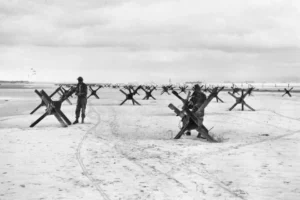
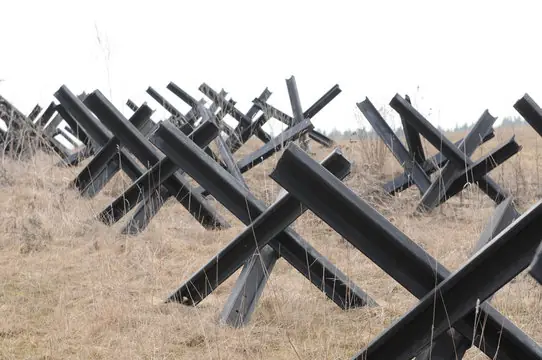
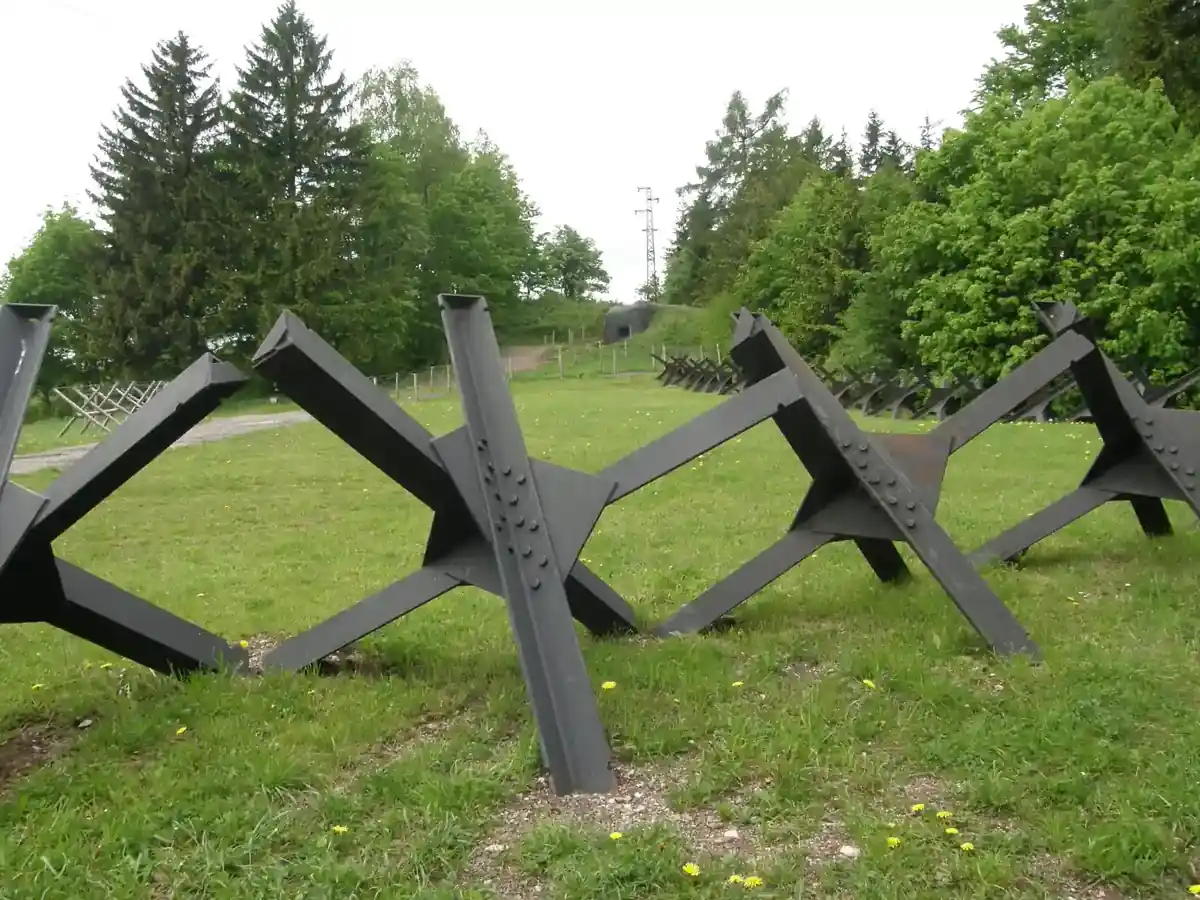
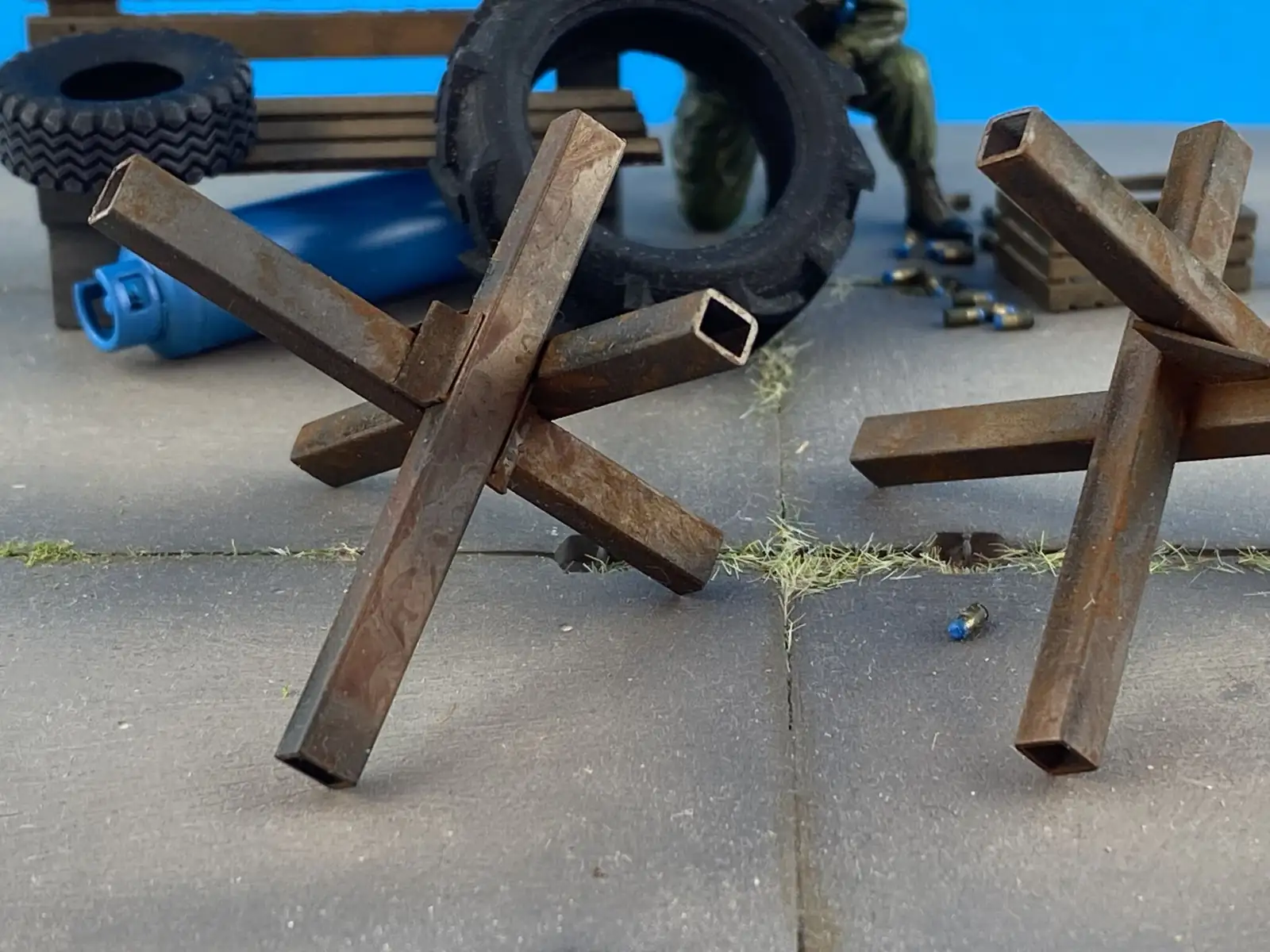
- Czech hedgehog military barriers: Three-dimensional steel barriers that are effective against both vehicles and personnel, a proven design used since World War II.
Integrated Security Systems
Modern border fortification equipment goes beyond simple barriers. Complete systems include surveillance cameras, ground radar, motion sensors, thermal imaging, and access control points. The physical barrier is the first line of defense, but electronic detection ensures that breaches are detected immediately.
Portable solutions are increasingly important for border security forces that need flexible, re-deployable equipment. Portable vehicle barrier military systems can be transported by truck and deployed in hours, providing temporary protection for patrol bases, checkpoints, and rapidly changing threat areas.
Types of Border Fortification Barriers
Border fortification barriers come in several distinct types, each designed for specific threat levels, deployment scenarios, and budget constraints. Understanding the available options helps military planners and security professionals select the most cost-effective solutions.
| Barrier Type | Primary Use | Installation Time | Portability | Cost per Meter |
|---|---|---|---|---|
| Steel Hedgehog Barrier | Anti-vehicle, anti-personnel | Hours (dropped in place) | High | $200–$600 |
| Military Steel Barrier | Vehicle checkpoints, perimeters | Days (with anchoring) | Medium | $500–$2,000 |
| Concrete Wall | Permanent border security | Weeks–months | None | $1,000–$3,000 |
| Anti-Climb Fencing | Personnel deterrence | Days | Low | $100–$500 |
| Portable Vehicle Barrier | Temporary checkpoints | Hours | High | $5,000–$15,000/unit |
| Dragon Teeth (Concrete) | Anti-tank defense | Weeks | None | $200–$600/unit |
Steel Hedgehog Barriers
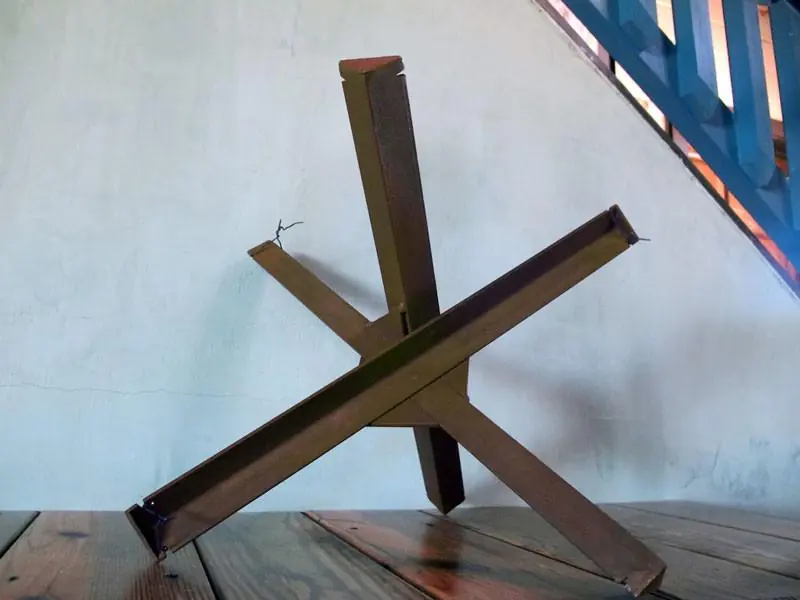
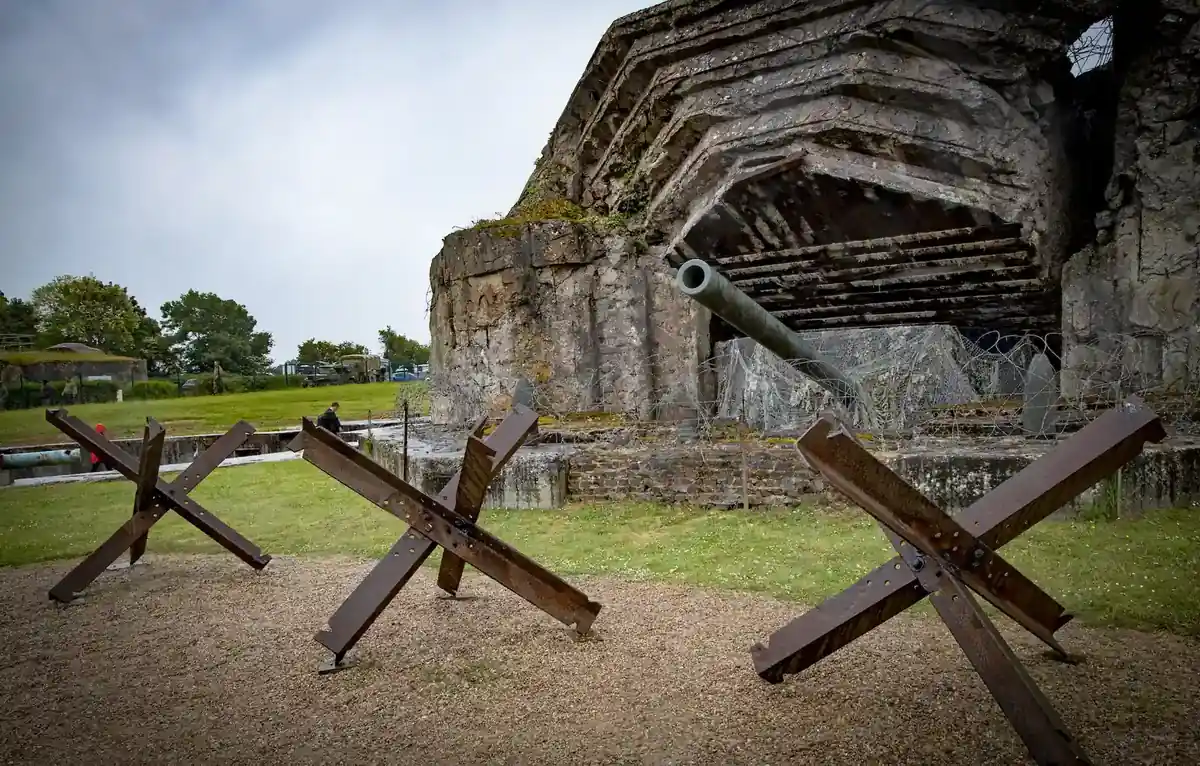
The Czech hedgehog military barrier remains one of the most effective and cost-efficient border fortification solutions. Made from three intersecting steel beams (typically 1.5–2 m each), the hedgehog is effective in any orientation. When deployed in mass, hedgehog barriers create an impassable obstacle for both vehicles and personnel. Their portability makes them ideal for military forces that need to rapidly reinforce border sections.
Integrated Barrier Systems
Modern border fortification increasingly uses modular systems that combine steel barriers with sensor integration. These systems allow border guards to monitor long sections of perimeter from a central command post, reducing personnel requirements while maintaining security coverage.
Military Steel Barriers and Czech Hedgehog Systems
Military steel barriers and Czech hedgehog military barriers are among the most widely deployed border fortification equipment types worldwide. Their steel construction offers durability, portability, and proven combat effectiveness.
Military Steel Barrier Design and Specifications
A military steel barrier is typically fabricated from structural steel beams (I-beams, H-beams, or heavy-duty pipe) welded into a configuration designed to stop or impede vehicles. Common designs include:
- Tripod/Tetrahedral barriers: Three-beam configurations that create a stable, non-orientation-dependent obstacle. Each leg is 1.5–2 m long, made from 150–300 mm steel beams.
- Vertical post barriers: Steel posts set into concrete foundations with barriers spanning between them, creating a continuous wall.
- Wedge barriers: Angled steel plates designed to lift vehicle wheels off the ground, immobilizing the vehicle.
The Czech hedgehog military barrier is a specific type of military steel barrier that has been in continuous use since 1938. Originally developed in Czechoslovakia as an anti-tank obstacle, the hedgehog consists of three steel beams or rails welded at their centers at 60-degree angles. The design requires no foundation — it can be deployed simply by placing it on the ground. Its effectiveness comes from the fact that in any orientation, at least one leg points upward to engage a vehicle underbelly or track.
Advantages of Steel Over Concrete
Steel barriers offer significant advantages over concrete for military border fortification: they can be mass-produced in factories, transported efficiently, deployed without heavy equipment, and repositioned as tactical requirements change. Steel barriers also have a longer service life when properly maintained and can be repaired with standard welding equipment.
For border security forces requiring mobile defense solutions, military steel barriers are the equipment of choice. Their modular nature allows them to be stored in peacetime and rapidly deployed during crises, providing immediate security enhancement without construction delays.
Portable Vehicle Barrier Military Solutions
For military forces that require flexible, rapidly deployable security solutions, portable vehicle barrier military systems provide essential protection at temporary positions, checkpoints, and forward operating bases. These barriers are designed to be transported, deployed, recovered, and redeployed multiple times.
Types of Portable Military Barriers
Portable vehicle barrier military solutions include several distinct product categories:
- Steel tripod barriers: Welded steel structures that can be placed by hand or with light equipment. A typical 450 kg steel tripod barrier can be positioned by a small team using a forklift or improvised rollers. Once in position, these barriers provide effective protection against vehicles up to 7–10 tons.
- Container barriers: Modified shipping containers filled with sand, gravel, or concrete. These provide heavy protection but require transport and filling infrastructure. A standard 20-foot container barrier weighs approximately 20 tons when filled.
- Hydraulic barriers: Transportable hydraulic wedge barriers that can be deployed at temporary checkpoints. These offer certified crash ratings in a package that fits on a standard military trailer.
- Water-filled barriers: Plastic or steel barriers that are transported empty and filled with water on site. While lighter than concrete alternatives, they provide limited protection against determined vehicle attacks.
- Rapid-deployment barrier systems: Pre-assembled barrier sections that connect together to form continuous vehicle barriers. These systems can deploy several hundred meters of barrier in a single day using a small crew.
Portable Barrier Deployment Considerations
When selecting portable vehicle barrier military equipment, consider the deployment timeline (how quickly can the barrier be operational?), transport requirements (how many trucks are needed to move the system?), and recovery logistics (can the barrier be removed and stored for future use?). Steel tripod barriers offer the fastest deployment — a single soldier can position a small barrier, and a team can set up a perimeter of 100+ barriers in a few hours.
Portable barriers are particularly valuable for border patrol units that need to establish temporary checkpoints, reinforce sections of border during periods of heightened threat, or support humanitarian operations where security requirements may change rapidly.
Permanent vs Temporary Border Fortification Equipment
One of the most important decisions in border security planning is choosing between permanent and temporary border fortification equipment. Each approach has distinct advantages, and most comprehensive border security strategies incorporate both.
Permanent Border Fortification Equipment
Permanent border fortification includes concrete walls, fixed steel barriers with deep foundations, reinforced fencing with integrated sensors, and structures designed for decades of service. These systems are characterized by:
- High initial cost: Permanent installations require significant engineering, earthworks, foundations, and construction. Cost per kilometer can range from $500,000 to $5 million depending on materials and complexity.
- Low maintenance: Once installed, permanent barriers require minimal ongoing maintenance beyond periodic inspection and minor repairs.
- Maximum deterrence: The visible permanence of concrete walls and fortified structures provides a strong psychological deterrent effect.
- Limited flexibility: Permanent barriers cannot be easily moved or reconfigured. Changes in threat patterns or border alignments may require expensive modifications or complete reconstruction.
Temporary Border Fortification Equipment
Temporary border fortification, including portable vehicle barriers, steel hedgehogs, and modular fencing, offers flexibility that permanent structures cannot match:
- Lower initial investment: Temporary equipment can be procured incrementally and deployed as needed. A battalion set of steel hedgehog barriers costs $100,000–$500,000 depending on quantity.
- Redeployability: Equipment can be moved between border sections as threat levels change, providing efficient use of limited defense resources.
- Storage capability: Barriers can be stored in peacetime and deployed rapidly during crises, providing surge capacity without ongoing operating costs.
- Training value: Temporary equipment can be used for training exercises and then redeployed to operational positions, maximizing return on investment.
Hybrid Approaches
Most modern border fortification strategies use a hybrid approach: permanent barriers at critical points (border crossings, urban interfaces, strategic chokepoints) complemented by temporary or modular equipment that can be surged to reinforce sections during periods of elevated threat. This approach optimizes both security effectiveness and budget efficiency.
How Border Fortification Equipment Is Deployed
Understanding how border fortification equipment is deployed is critical for effective military planning. Deployment methodology affects the speed, cost, and ultimate effectiveness of any border security system.
Deployment Planning Process
The deployment of border fortification equipment follows a systematic process:
- Threat assessment: Identify the specific threats to be addressed — vehicle-borne attacks, personnel infiltration, or combined threats. The threat level determines the required barrier specifications.
- Terrain analysis: Evaluate the terrain along the border section to identify natural obstacles, access routes, and optimal barrier placement. Steep slopes, rivers, and forests can supplement man-made barriers.
- Barrier layout design: Design the barrier alignment to cover vulnerable sections while allowing for authorized crossing points. For steel hedgehog barriers, staggered rows provide maximum effectiveness.
- Equipment staging: Pre-position barrier equipment at strategic locations so it can be deployed rapidly when needed. Storage depots should be located within 2–4 hours transport time of deployment zones.
- Installation: Deploy the barriers according to the layout plan. Steel hedgehog barriers can be dropped from trucks or positioned with light equipment. Concrete barriers require formwork, pouring, and curing time.
- Integration: Connect physical barriers with surveillance systems, access control, and response protocols to create a complete security system.
Rapid Deployment Techniques
For military forces needing to establish border security quickly, rapid deployment techniques are essential. A company-sized element (approximately 150 personnel) can deploy up to 500 steel hedgehog barriers in a 10-hour work period, creating an effective anti-vehicle barrier along 2–3 km of border. Mechanical handling equipment such as forklifts, excavators, and crane trucks can multiply deployment speed by 3–5 times compared to manual placement.
Deployment of border fortification equipment must also account for humanitarian considerations. Border barriers should include designated crossing points for authorized personnel, wildlife passages where required, and drainage systems to prevent environmental damage. Well-planned deployment balances security requirements with operational and environmental responsibility.
How to Choose the Right Border Fortification Equipment
Knowing how to choose the right border fortification equipment for military use requires a structured evaluation of threat, terrain, budget, and operational requirements. This section provides a decision framework for military planners and procurement officers.
Step-by-Step Selection Framework
Step 1: Define the threat profile. What types of incursions are expected? Vehicle-borne threats require different equipment than personnel infiltration. The weight and speed of potential threat vehicles determines the required barrier impact rating.
Step 2: Assess deployment timeline. How quickly must the fortification be operational? If immediate protection is needed, pre-fabricated steel barriers (Czech hedgehog or tripod types) are the only viable option. If construction time is available, concrete barriers may offer better long-term value.
Step 3: Evaluate terrain and site conditions. Soft soil, rocky ground, and frozen tundra each require different foundation approaches. Steel barriers that can be surface-deployed without foundations are preferable in challenging terrain.
Step 4: Consider mobility requirements. Will the barrier need to be moved or reconfigured? Portable solutions like military steel barriers offer flexibility that permanent concrete walls cannot match. For border units that operate in multiple sectors, portable equipment is essential.
Step 5: Budget and lifecycle costing. Compare not just initial procurement costs but also installation, maintenance, and eventual removal costs. A portable steel barrier that costs more upfront but can be reused at multiple locations over 20 years may offer better value than a cheaper concrete barrier with zero reuse potential.
Step 6: Manufacturer evaluation. Which companies manufacture border fortification equipment? Leading suppliers include specialized defense steel fabricators with experience in military-grade barrier production. Request certifications, test reports, and references from past military projects.
Common Selection Mistakes
Avoid these common pitfalls: choosing the cheapest option without considering lifecycle costs, selecting permanent solutions when the tactical situation is uncertain, and failing to integrate barriers with surveillance and response systems.
Border Fortification Equipment Cost
The cost of border fortification equipment varies widely depending on the type, materials, scale, and installation requirements. Answering "How much does border fortification equipment cost?" requires analyzing specific product categories and their associated expenses.
Equipment Cost Ranges
| Equipment Type | Unit Cost | Installation per Unit | Lifespan |
|---|---|---|---|
| Czech Hedgehog Barrier (steel) | $400–$1,200 | $0–$50 (drop in place) | 15–20 years |
| Military Steel Barrier (tripod) | $800–$2,500 | $50–$200 | 15–25 years |
| Portable Vehicle Barrier | $5,000–$15,000 | $500–$2,000 | 10–20 years |
| Concrete Wall (per meter) | $1,000–$3,000 | Included in unit cost | 50+ years |
| Anti-Climb Fencing (per meter) | $100–$500 | $50–$150 | 15–25 years |
| Sensor-Integrated Barrier (per meter) | $2,000–$5,000 | $500–$1,500 | 10–20 years |
Cost Factors
The primary factors driving border fortification equipment costs include:
- Material costs: Steel prices fluctuate with global commodity markets. A 10% increase in steel prices can add 5–8% to the cost of steel barriers. Concrete prices are more stable but vary by region.
- Transportation: Heavy steel barriers are expensive to transport. A truckload of 20 hedgehog barriers may cost $500–$2,000 to deliver depending on distance. International shipping adds customs and logistics coordination.
- Installation complexity: Barriers that require foundations, excavation, or concrete work cost significantly more to install than surface-deployed alternatives.
- Quantity discounts: Bulk orders of 500+ units typically receive 10–20% discounts. Long-term framework agreements with manufacturers can reduce per-unit costs further.
- Customization: Custom paint, corrosion protection (galvanization), or integration features add 10–30% to base equipment costs.
Budget Planning
For a typical military border fortification project, equipment costs represent 40–60% of the total budget, with transportation, installation, and integration accounting for the remainder. A complete border security solution for 10 km of border using a hybrid approach (permanent concrete at critical points + steel hedgehogs for mobile defense) would typically cost $2–10 million depending on specification and local conditions.
Conclusion
Border fortification equipment is a critical investment for any nation or military force seeking to secure its borders against vehicle and personnel threats. The range of available equipment — from Czech hedgehog military barriers and steel tripod traps to permanent concrete walls and integrated sensor systems — provides solutions for every threat level, budget, and deployment scenario.
Key takeaways from this guide:
- Equipment selection should be driven by a thorough threat assessment and terrain analysis, not by budget alone.
- Military steel barriers (including Czech hedgehog systems) offer the best balance of cost, effectiveness, and portability for most military border fortification requirements.
- Portable vehicle barrier military solutions provide essential flexibility for units operating in dynamic threat environments.
- Permanent barriers are best suited for strategic chokepoints and high-threat areas, while temporary equipment provides surge capacity and operational flexibility.
- Integration of physical barriers with surveillance and response systems maximizes the effectiveness of any border fortification investment.
- Working with established manufacturers and requesting certified test reports ensures your equipment will perform as specified.
For detailed specifications, pricing, and deployment planning assistance for border fortification equipment, contact our defense solutions team. We provide end-to-end support from equipment selection through delivery and deployment.